FREE SHIPPING FOR ORDERS OVER $199
60 DAYS RETURN POLICY
5% OFF FOR NEWSLETTER-SIGN UP

Decorate a small home office – details to make your working day easier


Where should you set up a home office?
Before choosing furniture, it’s worth carefully considering where to set up your home office. The right location can influence your concentration, well-being and how you use the space.
Ideally, choose a quiet area with plenty of natural light. Position your desk to the side of a window where possible to avoid glare on your screen while still benefiting from a bright working environment.
If you don’t have a separate study, there are plenty of home office ideas for making use of the space you already have. A free wall in the living room, a nook in the bedroom or a space under the stairs can all become practical workspaces. This can be particularly useful for small home office ideas.
Try to visually separate your workspace from the rest of the room with a shelf, rug or different wall colour. Also, make sure there is enough space to move around comfortably. A tidy, well-organised workspace will feel more spacious and make it easier to concentrate.
1. Choosing the right desk
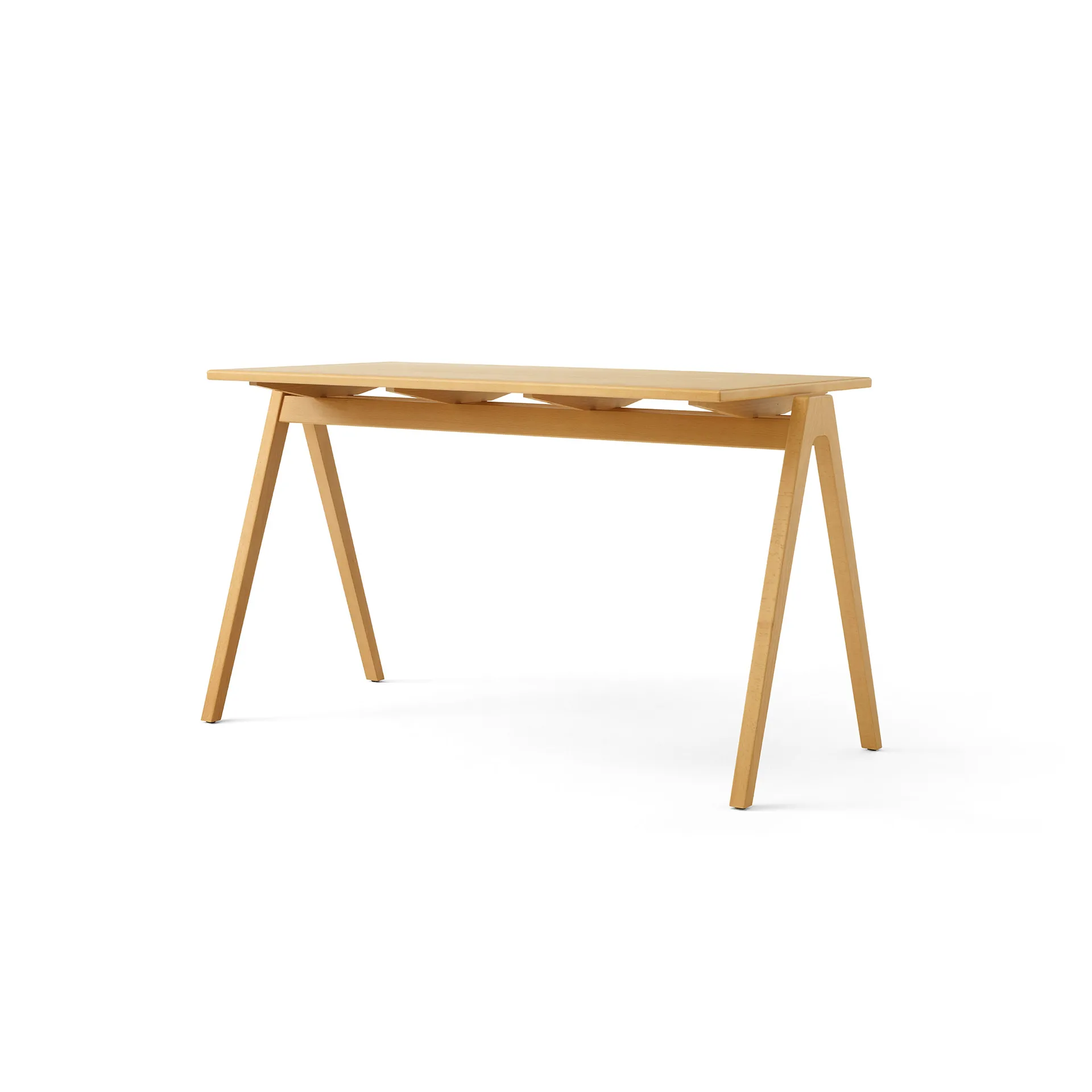
The desk is the centrepiece of any home office. Choose one that suits your working habits and provides enough space for everything you need throughout the day.
If you mainly work on a laptop, a compact desk may be enough. If you use multiple screens or regularly work with documents, opt for a larger desk with plenty of workspace and storage.
Height-adjustable desks are a popular home office ideas, allowing you to switch between sitting and standing throughout the day. This can encourage a more varied working position and help reduce strain on your back and shoulders.
The material and design also matter. Solid wood adds warmth and a natural feel, while lighter surfaces can make a room appear more spacious. Simple, timeless designs work particularly well when your home office is part of a living area.
Finally, consider the size of the room. A desk that is too large can overwhelm a small space, while one that is too small may quickly become impractical. The key is finding the right balance between functionality and proportions.


2. Finding the right office chair
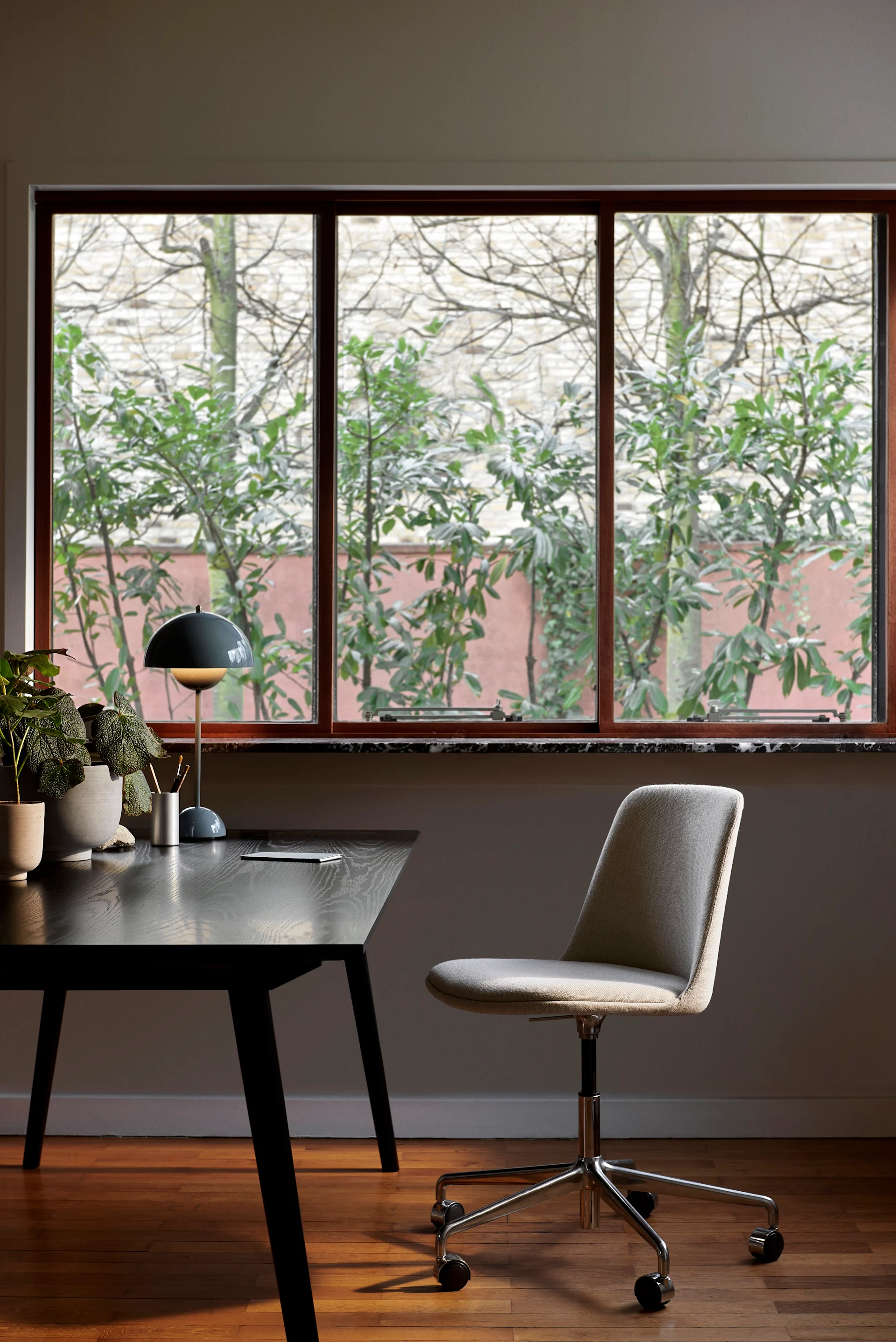
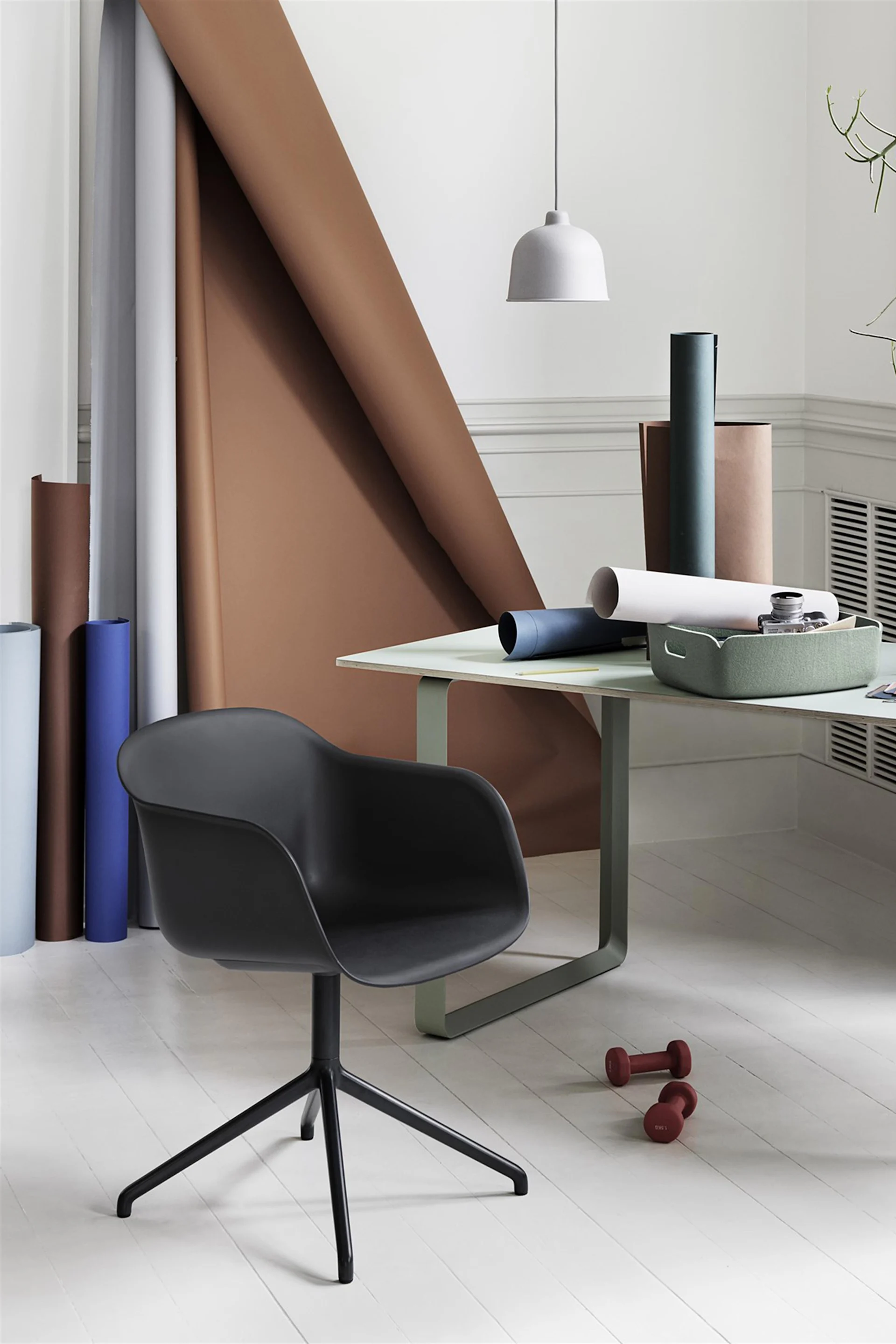
An ergonomic office chair is one of the most important investments for your home office, especially if you spend several hours at your desk each day. Good support helps prevent stiffness and keeps you comfortable throughout the working day.
Look for a chair with an adjustable seat height and backrest so you can adapt it to your body. Good lumbar support helps reduce strain on your back, while armrests can keep your shoulders relaxed. Breathable materials can also make sitting more comfortable.
Of course, an office chair should also suit your interior. Clean lines, quality materials and a timeless design allow it to blend naturally into your home while combining functionality with Scandinavian style.
Tip: Keep your feet flat on the floor, with your thighs and calves forming roughly a right angle. This creates a more ergonomic sitting position and helps reduce strain on your body.

3. The right lighting for your home office
Good lighting is essential for a comfortable home office. It can reduce eye strain, support concentration and create an atmosphere that makes you feel at ease.
Make the most of natural daylight by positioning your workspace near a window where possible. Avoid direct sunlight on your screen, however, as glare can put unnecessary strain on your eyes.
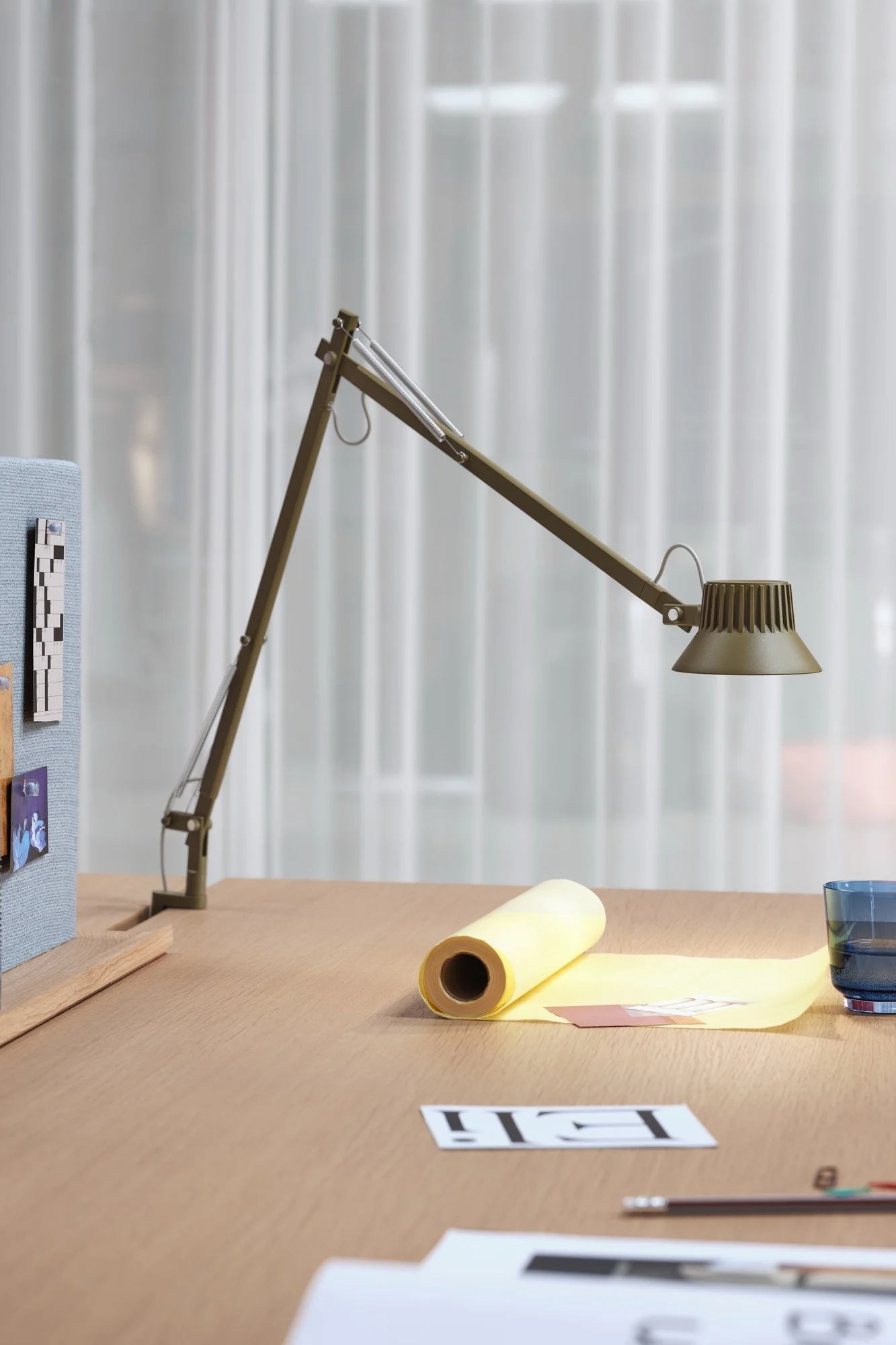
A good desk lamp provides focused light exactly where you need it. Choose a model with an adjustable arm or swivelling head, and consider a dimmable lamp so you can adapt the light throughout the day.
Combine task lighting with general room lighting for a balanced effect. A ceiling light, indirect lighting or a rechargeable table lamp can help prevent harsh contrasts between your screen and the surrounding space.
Read more:


Which desk lamp is best?
The best desk lamp combines practical features with timeless design. When choosing a lamp for your home office, look for:
- Glare-free light
- An adjustable lamp arm or head
- Dimmable brightness
- Energy-efficient LED technology
- A comfortable light colour, from warm white to neutral white
Cordless table lamps are particularly versatile. They can be moved wherever you need extra light – not only on your desk, but also on a shelf or sideboard.
4. Keep your home office organised
A tidy workspace is proven to have a calming effect and helps you to focus on what matters most. At the same time, it makes it easier to find documents and work materials quickly when needed.
When setting up your office, consider which items you need on a daily basis and what can be stored away from your immediate workspace.
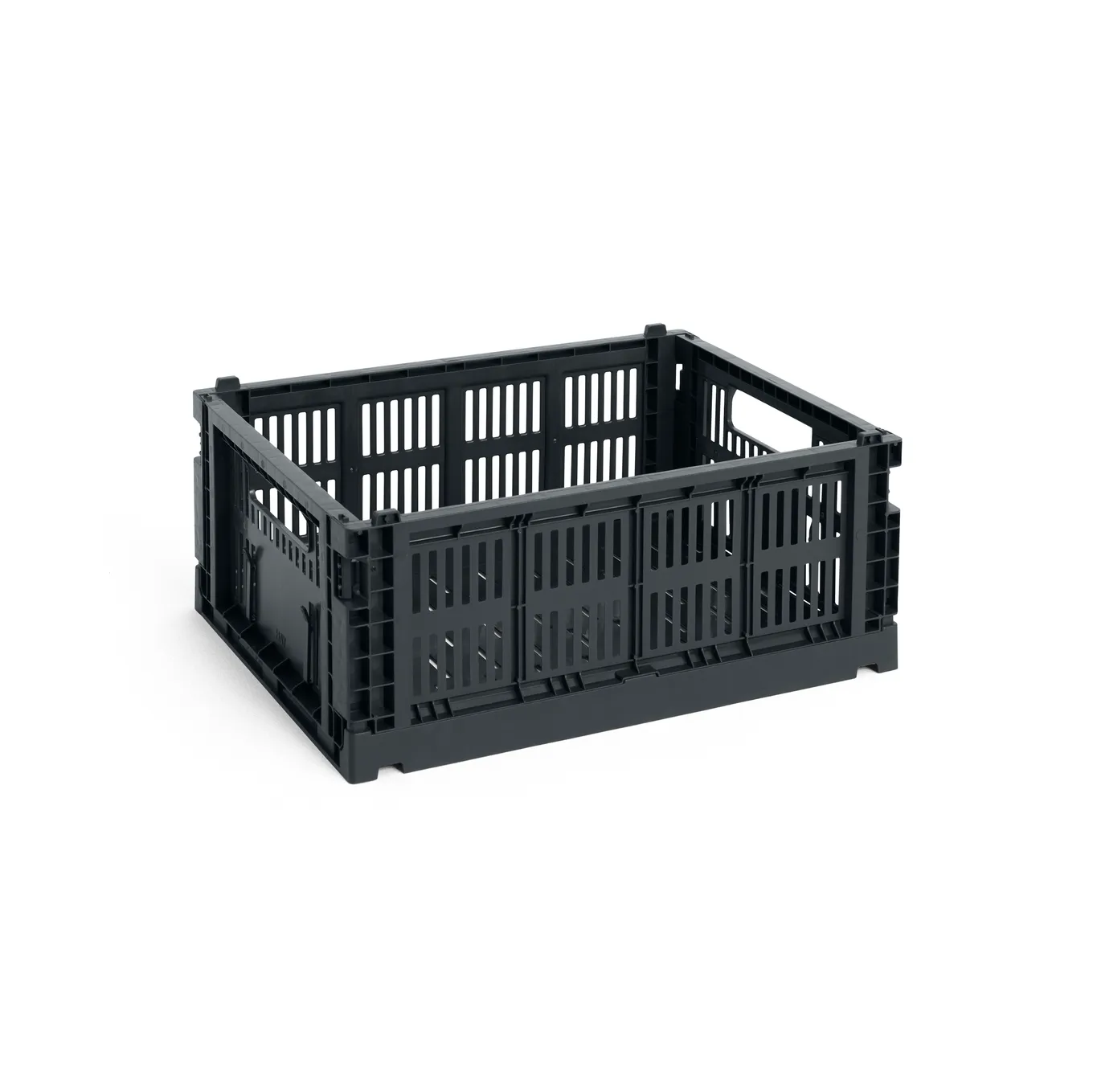
Open shelves are ideal for books, files or your favourite decorative items. Closed boxes and baskets, on the other hand, create calm and make the room appear tidier.
Particularly practical items include:
- Folders for you documents
- A letter tray
- Desk organisers
- Storage boxes
- Baskets
- Filing cabinets
The fewer items that are permanently left on your desk, the more spacious and tranquil your workspace will feel.
Read more here: Organise your home – tips to help you declutter


Organising your desk – less is more
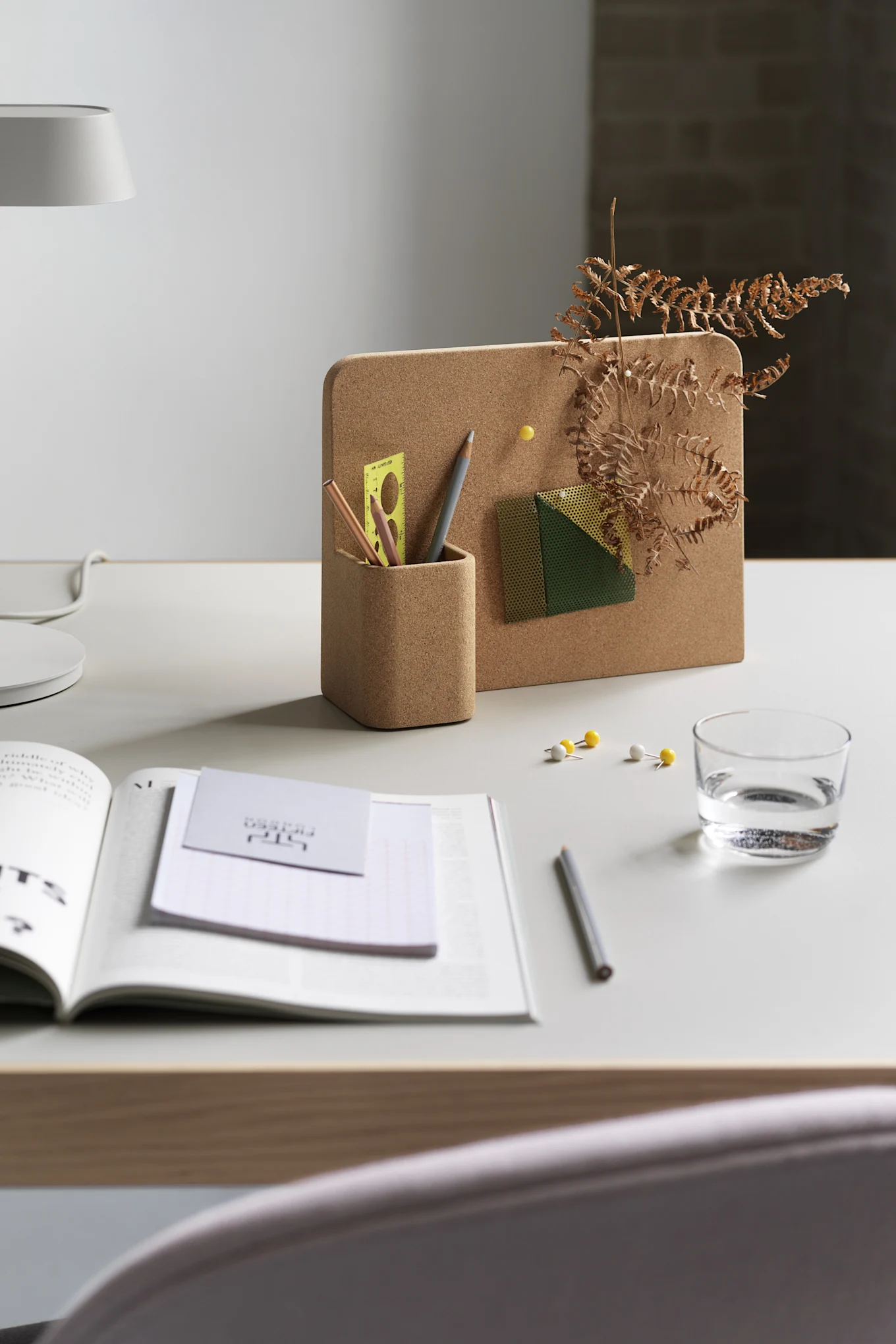
A tidy desk not only keeps things organised, but also makes it easier to concentrate on your work. For each item, ask yourself whether you really need it every day. Everything else can be tucked away in drawers or storage boxes.
Useful items include:
- Pen holder
- Notepad
- Calendar
- Letter tray
- Desk mat
- Monitor stand
- Cable organiser
Complement these functional items with a few carefully chosen accessories – such as a small vase, a candle holder or a wooden figurines. This gives your workspace a personal touch without making it look cluttered.




Cable management – small details with a big impact
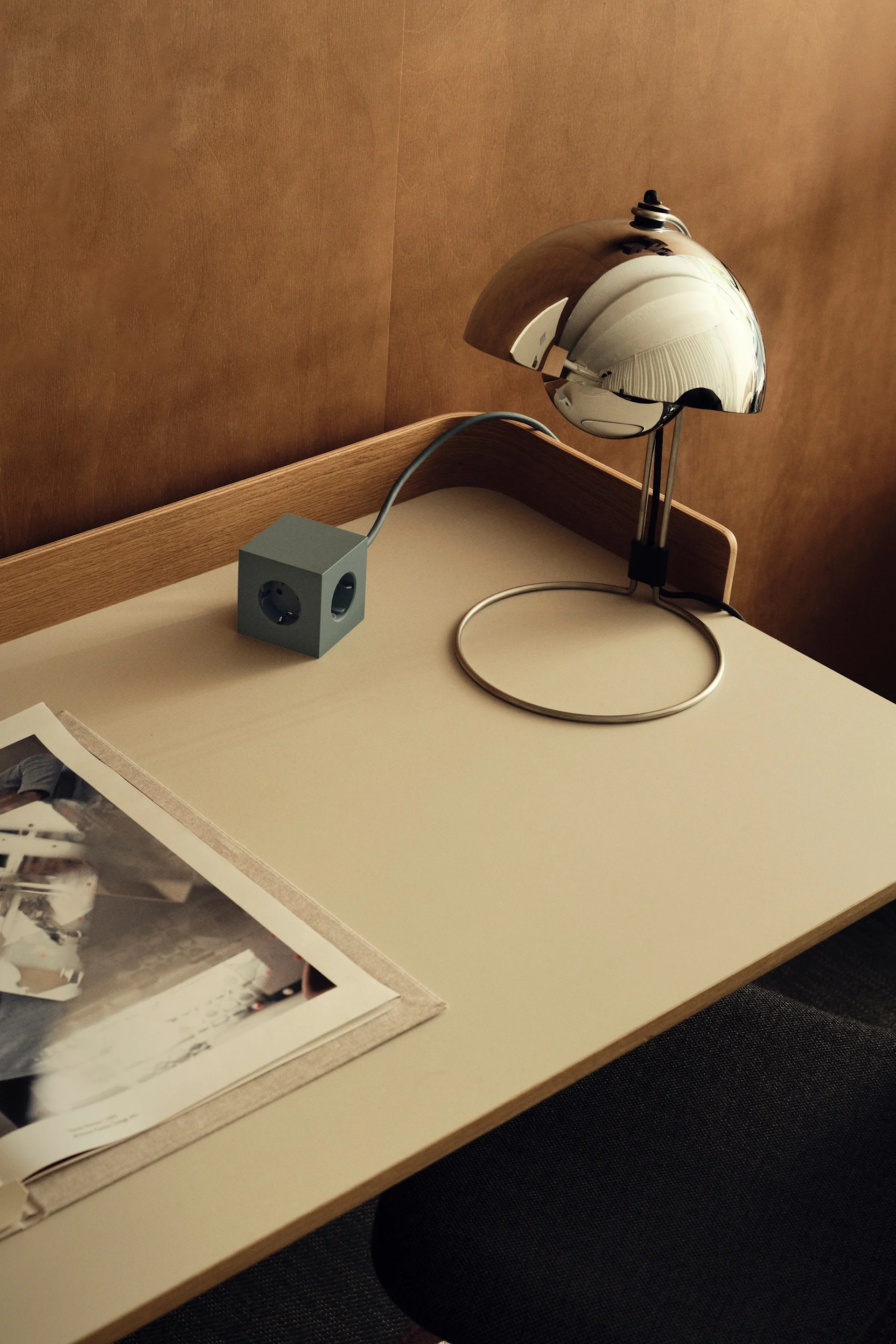
Loose cables are one of the most common reasons why a workspace looks untidy.
You can remedy this with some simple and smart home office ideas:
- A cable box to conceal power strips.
- Cable clips keep charging cables neatly organised across the desk.
- Cable sleeves bundle several cables together.
- Cable guides under the desk ensure plenty of leg room.
Cable management contributes significantly to a calmer feeling overall in your home office and makes cleaning easier.

Wastepaper bins and other handy items
It’s the little things that make all the difference to how comfortable your workplace feels on a day-to-day basis, especially if you have a small home office space.
A wastepaper bin is a staple of any home office and should be easily accessible without getting in the way. In addition, scissors, a hole punch, a stapler or a filing tray for important documents make day-to-day work easier.
Where possible, choose accessories made from similar materials or in a coordinated colour scheme. This gives your home office ideas a more harmonious feel.



5. Making clever use of shelves
Shelves are among the most versatile pieces of furniture in a home office. They provide extra storage space without taking up valuable work surface area, whilst also allowing you to add a decorative touch.
Folders, books and documents can be stored here just as easily as vases, pictures or design objects. A balanced mix of functional and decorative elements ensures that the shelf looks lively without appearing cluttered.
Modular shelving systems like String can be flexibly expanded and adapted to changing needs – an ideal solution as your home office evolves over time.
Read more here:




6. Colours and materials for your home office
The design of your home office influences not only its appearance but also its atmosphere. Light colours make small rooms appear more spacious and reflect daylight particularly well. Natural tones such as beige, sand or warm grey create a calm backdrop, whilst accents can bring depth to the room.
Natural materials also play an important role in the Scandinavian interior design style, particularly when it comes to home office ideas. Wood, linen, wool and ceramics lend the office warmth and create a homely atmosphere. Combined with clean lines, this results in a timeless workspace that exudes tranquillity whilst also proving inspiring.
Wall décor should be deliberately understated. A large piece of art, a few framed photographs or a simple wall shelf add highlights without overloading the space. This keeps the focus where it belongs: on a workspace where it’s easy to concentrate.
Read more here:
7. Plants bring life to the home office
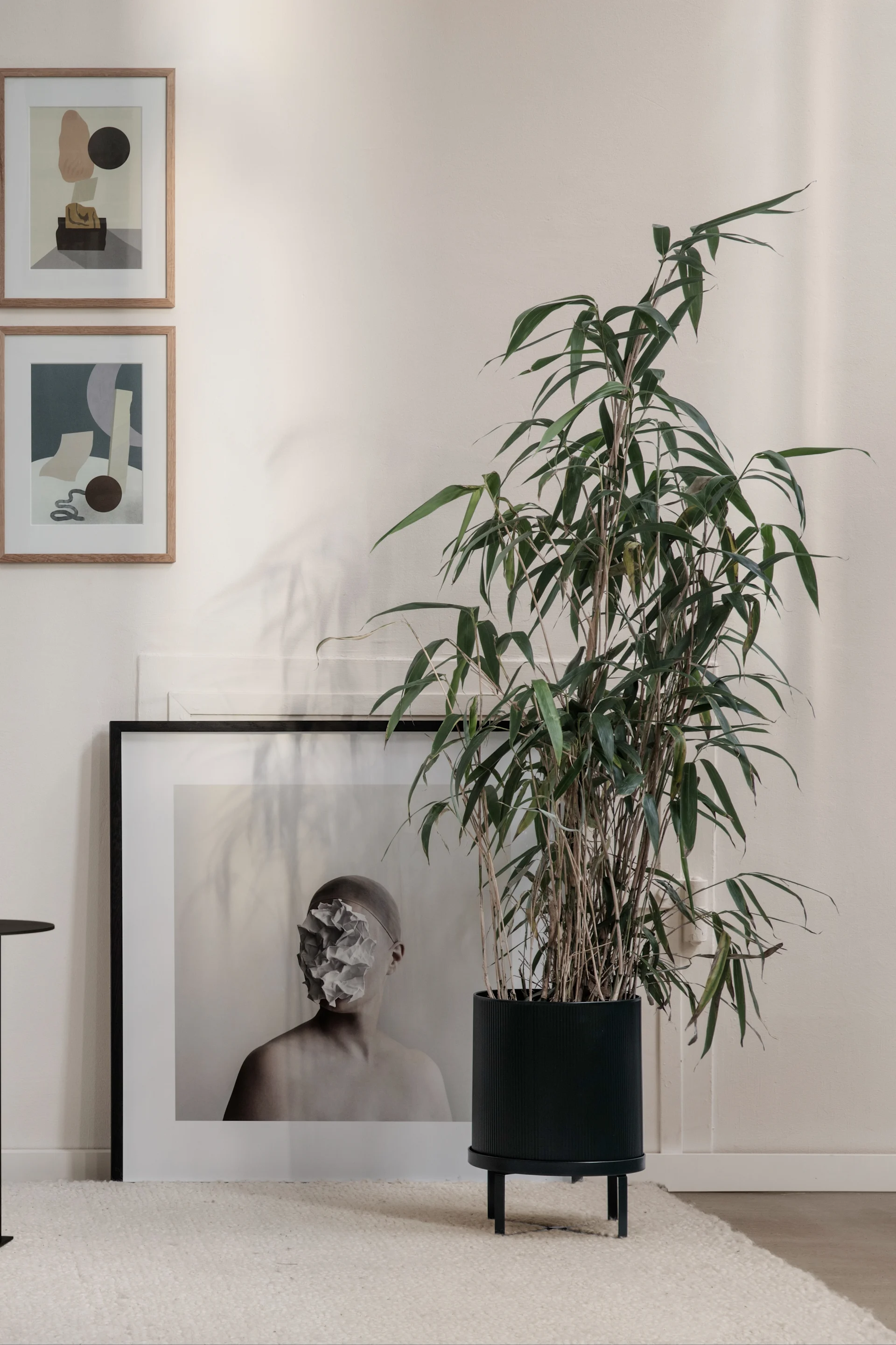
Plants are far more than just a decorative addition in your home office. They bring vitality to the workplace and provide a harmonious contrast to screens, technology and linear furniture. Even a single potted plant on your desk or a larger pot next to a shelf can make the room feel significantly more homely.
Plants such as the Monstera, pothos, snake plant and Zamioculcas are particularly easy to care for. They thrive even in low light and are ideal for the home office.
Combine plants with simple flower pots made of ceramic or natural materials for a look that fits perfectly with the Scandinavian interior design style.


Ideas for a small home office
Not everyone has a separate room to create a home office. However, with a well-thought-out layout, it is possible to create a functional workspace even in a small area of just a few square metres.
Narrow desks and wall shelves make the best use of the available space. Multifunctional furniture is also a good choice – such as a writing desk that can be closed at the end of the working day, or a sideboard that doubles as a work surface.
Light colours, natural materials and a few carefully chosen pieces of furniture ensure that small rooms feel open and spacious. At the same time, keeping things tidy helps to maintain a calm and organised workspace.
Tip: Make the most of the room’s height. Wall shelves provide extra storage space without taking up valuable floor space.
How can you work effectively from home?
A well-organised home office lays the foundation for productive work – but established routines are just as important. Structure helps you to stay focused and to separate your work life from your private life. Here are a few ideas to help making working from home easier:
1. Set fixed working hours
Where possible, start and finish your working day at fixed times. This creates a clear rhythm and makes it easier to really switch off at the end of the day.
2. Use your workspace consciously
Always work in the same place. This way, your brain automatically associates this space with concentration and productivity.
3. Take regular breaks
Short breaks to move around boost concentration and prevent tension. Even a few minutes of stretching or a short walk can give you a new burst of energy.
4. Alternate between sitting and standing
If you use a height-adjustable desk, change your position regularly. This relieves strain on your back and shoulders and stimulates circulation.
5. Reduce distractions
A tidy workspace, notifications turned off and clear priorities help you stay focused.
6. Make the most of natural light
Daylight supports your natural circadian rhythm and helps you feel more alert and focused.

Common mistakes when setting up a home office
Even high-quality furniture only fulfils its potential if it is used sensibly. These mistakes are easy to avoid:
- The desk is positioned directly in front of the window and the screen is causing a glare.
- The office chair is not adjusted correctly.
- There is not enough storage space for documents.
- The lighting consists solely of a ceiling light.
- Too many decorative items create a cluttered look.
- Cables are left lying visibly on the floor or desk.
- The workspace isn’t tidied away even after work.
Even small changes can significantly improve the comfort and functionality of your home office.

Home office ideas that will inspire you
A well-designed home office is more than just a functional workspace – it is a place where ideas take shape, projects flourish and focused work is should be a pleasure. With a carefully considered combination of ergonomic furniture, lighting and clever storage solutions, you can create an environment that conveys structure and tranquillity.
At the same time, functionality needn’t come at the expense of comfort. Natural materials, timeless design and carefully chosen details give your home office a personal touch and make it a place you’ll enjoy spending time in, day after day. After all, the best workspaces are those that feel just as good as they look.
Read more here:

DECORATE A SMALL HOME OFFICE
Customer Service
Selection
Inspiration